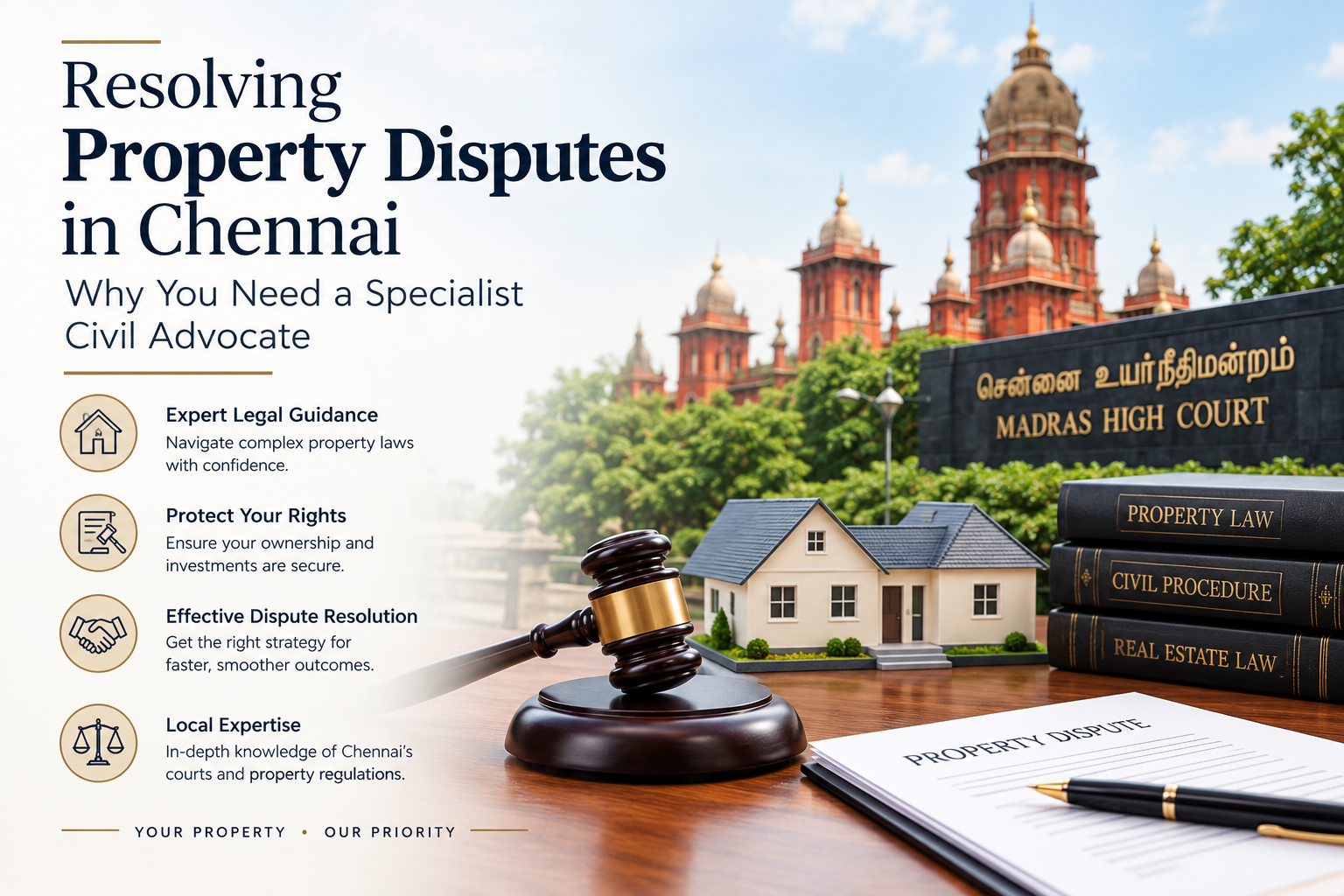
Real estate in Chennai represents a massive financial and emotional investment. When disputes arise over ancestral property, boundary encroachments, or fraudulent title transfers, the stakes are incredibly high. Often, individuals facing these crises instinctively search the internet for a "civil advocate near me." However, high-stakes property litigation requires far more than just geographic proximity. It demands a strategic litigator deeply versed in Indian property laws, local registry operations, and the specific procedural nuances of the Madras High Court and City Civil Courts.
Whether you are defending your rightful possession or seeking to untangle generations of undocumented family inheritance, early and precise legal intervention is your strongest asset.
Common Types of Property Litigation in India
Property law is highly document-intensive and governed by a complex web of statutes. A specialized civil advocate routinely handles matters including:
1. Partition of Ancestral and Joint Family Property
Disputes frequently arise when co-owners or legal heirs cannot agree on the division of shared assets. Partition suits are notoriously complex, often involving multiple generations, intestate succession, and the interpretation of the Hindu Succession Act (particularly the 2005 amendment recognizing daughters as coparceners). If family negotiations fail, a civil advocate will file a partition suit to ensure the property is legally divided by metes and bounds, securing your rightful share.
2. Title and Ownership Disputes
In a rapidly developing real estate market like Chennai, title disputes are common. These involve forged sale deeds, overlapping boundaries, or encumbrances that were hidden during a transaction. An experienced advocate will conduct a rigorous scrutiny of the parent documents, Encumbrance Certificates (EC), and revenue records (Patta/Chitta) to challenge fraudulent transfers and establish absolute legal title under the Transfer of Property Act.
3. Injunctions and Protecting Possession
If someone is attempting to illegally dispossess you of your property, demolish a structure, or sell a disputed asset to a third party, immediate court intervention is required. Under the Specific Relief Act, a civil advocate can file an urgent application for a temporary injunction (stay order) to preserve the status quo of the property until the court fully adjudicates the matter.
4. Breach of Agreement of Sale
When a buyer or seller backs out of a formalized property transaction after an advance has been paid, civil litigation is necessary to either force the completion of the sale (a suit for specific performance) or recover the financial damages with interest.
The Role of a Civil Advocate in Property Matters
Property litigation is won or lost on the strength of the documentation and procedural strategy. A seasoned advocate will:
Conduct a Legal Audit: Identify missing links in the title chain before filing a suit.
Draft Legal Notices: Formally establish your claim and demand compliance, which is often a mandatory prerequisite to litigation.
Lead Trial Proceedings: Draft precise pleadings, conduct cross-examinations, and present compelling legal arguments in court.
Litigation vs. Settlement: The ADR Advantage
Not all property disputes must endure decades of litigation. In many cases, especially those involving family members or commercial real estate, Alternative Dispute Resolution (ADR) is a highly effective route. As an expert in arbitration and conciliation, a specialized advocate can leverage mechanisms under Section 89 of the Code of Civil Procedure to negotiate binding settlements, saving clients immense time, legal costs, and emotional distress.
How to Choose the Right Representation
When your financial legacy is on the line, choosing the right counsel is critical. Prioritize:
Jurisdictional Expertise: An advocate intimately familiar with the Chennai civil court system, local municipal laws, and sub-registrar procedures.
Documentary Precision: A professional who meticulously reviews every page of a registered deed rather than making assumptions.
Transparent Strategy: Counsel who objectively explains the limitation periods, the strength of your evidence, and the realistic timeline of Indian civil litigation.
Conclusion
Ignoring a property dispute will not make it disappear; it will only complicate the title and weaken your legal standing. If you are facing a real estate conflict, the legal professionals at Chennai Legal Services offer uncompromising, strategic, and confidential representation to protect your assets and secure your property rights.
Disclaimer:
The information provided in this article is for general informational purposes only and does not constitute legal advice. Reading this article does not establish an attorney-client relationship. Property cases are highly fact-specific. The legal opinions and strategies applicable to any specific matter depend strictly on the individual facts, registered documents, and evidence involved. Readers are advised to consult a qualified legal professional regarding their specific circumstances.
Must Read : https://www.chennailegalservices.in/